This story talks about suicide, self-harm and addiction in detail. If you need support at any point, here are people you can contact.
I was a suicidal addict. Now I'm a trained, practicing coach.
My name's Cam. I don't drink, smoke or take drugs anymore. This is my story.
On the night I last attempted to take my own life, I was left numb in the days after, barely holding on. But something in me hadn't given up. That's what finally pushed me toward freedom.
"Two things kept me fighting: the will to live, and my own anger at what I'd done to myself."
That was the day I decided the old version of me no longer ran the show. My own independence day.
Whether you trust me with your own story starts here.
There was loneliness, long before the drinking started. I got drunk for the first time at thirteen. For a long time I thought there'd be a day when challenges just stopped coming, so I kept drinking through the hard parts, biding my time until it arrived. It took me a long time to see that day was never coming.
"That day isn't one singular day. It's a decision you make every day, to take responsibility for your life."
I was an awkward, anxious teenager who wanted to fit in. I found a friendship group who bonded over alcohol and drugs, and it let me feel comfortable in my own skin, until that comfort reverted to the same discomfort I'd been trying to avoid.
So, did I choose drugs, or did drugs choose me? Neither, really. I chose relief. What I kept choosing, over twenty-plus years, was to keep drinking and lie to myself about why, instead of getting sober.
I used to believe willpower was a fixed trait I'd been born short of, and I spent ten years trying to prove that wrong, losing every time. Trigger, reaction, drink, relief, shame, then drinking again to relieve the shame.
I'm not telling you this so you feel sorry for me. I'm telling you because I need you to know I understand what it's like when the pattern won't break, whatever your version of it looks like.
"That shame sent me straight back to the bottle."
At twenty, paycheck to paycheck, cocaine and drinking every weekend, no future beyond getting fucked up. I booked a one-way flight to Australia. A year later I was homeless in Darwin, questioning my existence. My Dad booked me a flight home.
I landed and arranged to see my Nan the next day. I woke up to my mum crying down the phone. My Nan had died in the night. I never got the chance to say goodbye.
Two relationships followed, both sabotaged. The second time, I ended up on a bridge, swaying dangerously, no longer able to weigh up the choice in front of me. I nearly took my own life.
The years after stayed just as dark: a car accident that nearly killed me, the death of my closest friend Jason, a period of self-harm. By the end, even the drinking and drugs had stopped being about escape. I was using them to hurt myself, before I finally got the help I needed to stop.
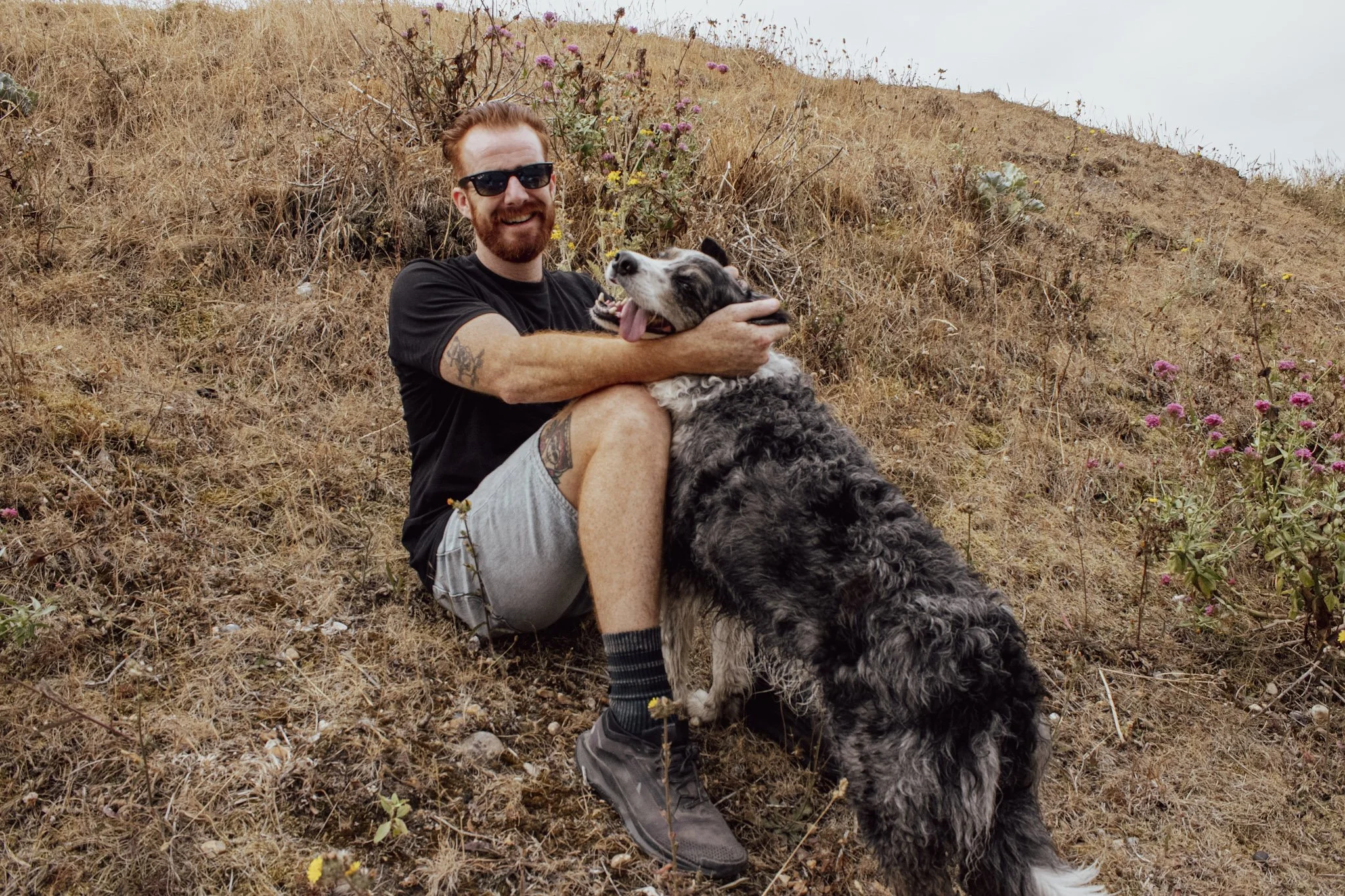
For ten years, the same ten years I'd spent trying and failing to drink less, I acted precisely as if I was fine. Early sobriety asks a lot: don't drink, deal with your emotions, be ok with who you are now, enjoy life. Everyone assumes that once you've stopped, everything must be fine. Wrong.
I needed a way to say that out loud, so I found one. Someone shared a metaphor with me I couldn't stop thinking about: Mauna Kea, a mountain that exists mostly below the ocean. What's underneath is bigger, older, the part that explains the shape of everything above it. I had no language of my own for what was happening inside me, so I borrowed one, and started writing my past out publicly for the first time, under the name @TheSoberSuccess on X (formerly Twitter). Not because I was The Sober Success, but because I needed to become one.
Saying it in public, dated and impossible to take back, made it real in a way private thoughts never had. I joined a twelve-week course with CGL (a UK drug and alcohol support service) and started seeing a therapist weekly. None of it made me feel better straight away. But it built a record of someone actually showing up, and that record is what I came back to on the days I didn't believe it yet.
"Have you ever acted, precisely, as if you're fine?"
The alcohol was gone, but the self-harm didn't stop with it. The anger that had driven the drinking had nowhere left to go. First that anger went into whatever was nearest, a wall, a door. Eventually it went into me instead. This is how I showed up as a dry drunk. Not self-hatred. Anger with nowhere else to land.
I'm stable now. I don't carry that anger anymore, and I don't need help managing self-harm any longer.
That help came in the form of coaching, counselling, EMDR therapy (a treatment that helps the brain reprocess traumatic memories), and years of sobriety, which taught me something I didn't believe for a long time: that even in real stress, I have a choice. I can delay the urge, distract myself with something real, then decide, with a clear head, whether I still want it.
Self-worth doesn't rebuild on the same timeline as sobriety. The drinking stopped the moment I decided it would. My belief that I deserved anything good took over a year of daily evidence before it started to hold.
A year and two weeks sober, with every visible reason to be proud, I still believed I was a failure. Someone would tell me well done, and I'd already be listing the reasons they were wrong. Doing something and believing you deserve credit for it are two different skills.
I started writing on X because I needed to feel connected to people going through something similar. Then someone asked me for help directly. I thought lived experience was enough. It wasn't.
I could listen and relate. But I hadn't created a safe psychological space, and my writing lived inside a supportive but unchallenging echo chamber. Engagement metrics slowly became evidence for my recovery. I was still a failure, still fragile, and I didn't have the skills required to provide a safe, ethical, professional service. I stopped writing on X and moved into a private journal.
That same delusion, the good kind, is what let me build a cabin in the woods with my Dad. But coaching needs a real understanding of ethics and safeguarding, and that was a delusion I couldn't allow. I'm grateful I saw it on that call.
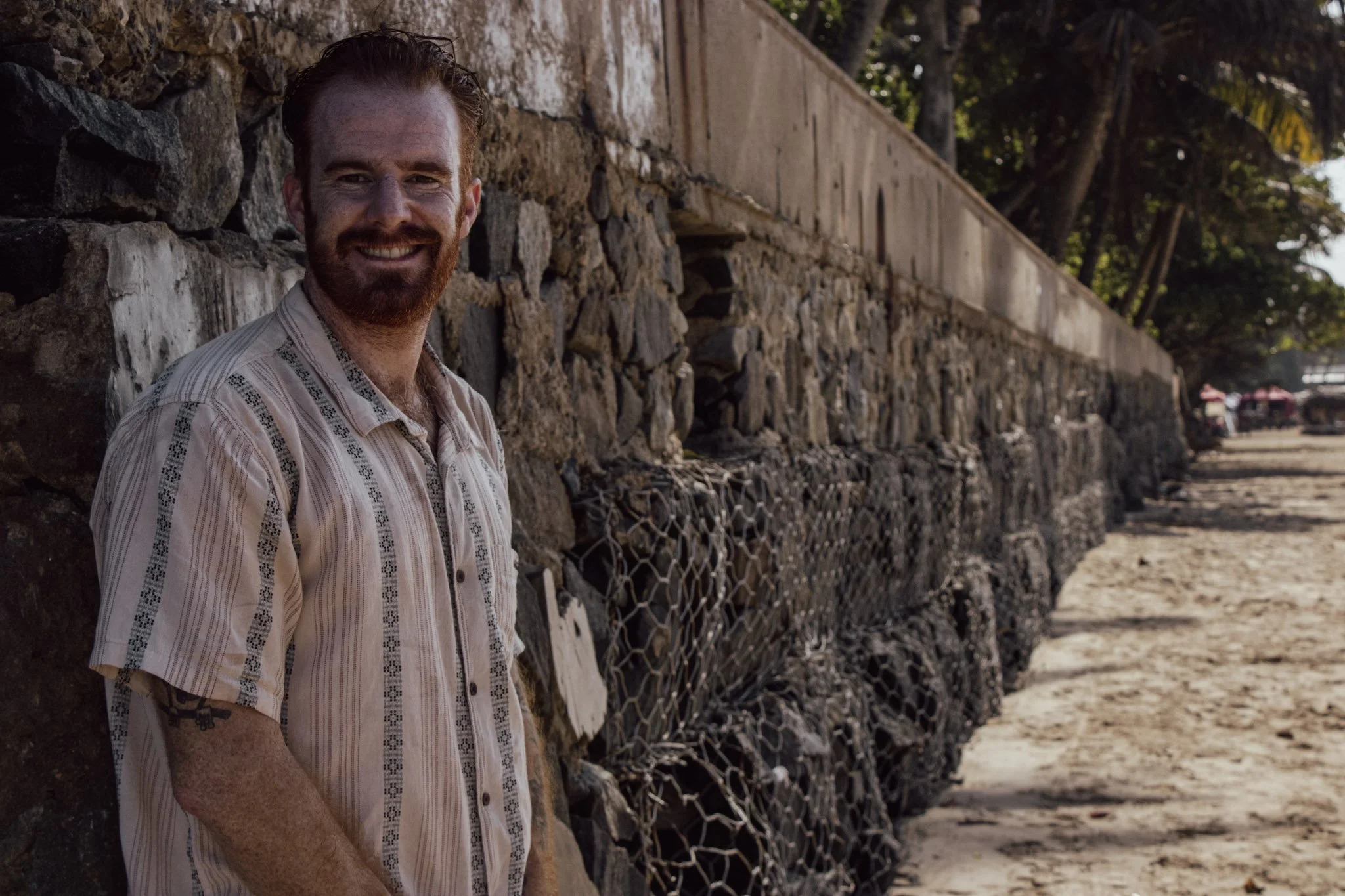
I moved to Sri Lanka and took a DASS-21 assessment (a clinical screening tool for depression, anxiety, and stress). It came back extremely severe across every measure. Sobriety wasn't my finish line. It was a starting point.
EMDR therapy to reorganise the memories in my head. Counselling to finally process Jason's death. Ayurvedic treatment, a cleaner diet, strength training for the first time in a decade.
I started my Diploma in Coaching and Positive Psychology, and partway through, realised I wanted to build my own coaching business, putting lived experience to work in service of other people.
On that first call, what I was missing wasn't understanding. It was competence. Storytelling gave me relatedness. It never gives you how to actually contract, listen, and hold space, safely. That's learned, and back then I didn't have it.
Once qualified, I reconnected with that person from the call. The help they'd found was well beyond what I could have offered back then. That confirmed I'd had the sense, even untrained, to say I can't help you with this.
About a month before my sobriety anniversary, I took a DASS-21 retest. All normal.
Positive psychology is the science of what allows people to flourish, grounded in what removing alcohol does to the brain and body, and what becomes possible once that's understood. It gives you a way to work with what's actually there, your strengths, your values, what you want your life to look like, instead of only working against what's wrong.
My story gave me understanding and connection. The training is what lets me actually help once you're in the room. Clients I've worked with have used it to figure out who they are once the drinking's no longer the main event, and to set a direction instead of just avoiding a relapse. When you work with me, it isn't about me. It's about you, and where you're going.
You don't have to have hit the point I did for this to matter. I'm not looking for how bad it's gotten. I'm looking at what you're ready to do about it.
You can read some of their experiences here.
Four steps. Nothing complicated.
Every stage is designed to give you a clear picture before you commit. You move at your own pace, and the decision to continue is yours at every point.
You fill in the form
Where you are, what you want, what has been getting in the way.
We book your chemistry call
Thirty minutes. £50 to book, credited towards your block if we go ahead, refunded if it's not right, forfeited if you don't show. This isn't a pitch, it's a genuine two-way conversation, both of us deciding whether this is a good fit. Because of what you've already shared in the form, we're not starting from scratch, the conversation begins somewhere real.
We agree what we're working on
The drinking itself, who you are now, or both. You read and sign the agreement.
We start
Every two weeks, 45 minutes, over video call, Message any time in between.
So, what's the point of all this?
If you're trying to get sober, or you're sober and figuring out who you are now, or you're ready to work with me, I will be in your corner. I know what alcohol costs, and I know what change becomes possible, because I've lived it and I'm qualified to coach it.
"I'm not fully healed, not fully fixed. I believe those terms are a fallacy."
The will to live won. And the cognitive dissonance I carried became the thing that trained me to help you with yours.
1:1 coaching, using Alcohol-Free Performance and Positive Psychology, built around wherever you're starting from, drinking or not.
Whatever brought you to this page, thank you for reading this far. When you're ready, this is where it starts.
Start Here →If anything in this brought something up for you that feels urgent right now, you don't have to sit with it alone. There are people who want to help you through whatever you're facing, right now, today. In the UK, Samaritans are free to call any time on 116 123.